- Call Us: +86 18123646045
- Email: Coralie@maopingart.com

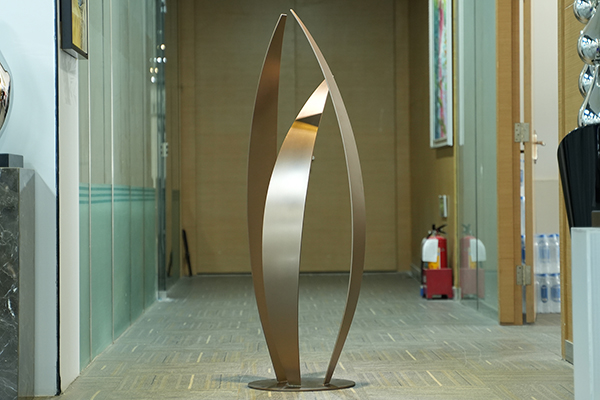
Abstract Modern Sculpture represents a significant shift in the art world, emphasizing form, material, and emotion over realistic representation. Unlike traditional sculpture, which often seeks to replicate human figures, animals, or objects in lifelike detail, abstract sculpture explores shapes, textures, and concepts. Artists working in this genre use abstraction to convey ideas, emotions, or philosophical statements, allowing viewers to interpret the work in multiple ways.
The roots of abstract modern sculpture can be traced back to the early 20th century, when artists began challenging conventional artistic norms. Influenced by movements such as Cubism, Futurism, and Constructivism, sculptors started experimenting with geometric shapes, non-traditional materials, and innovative construction techniques. The departure from realism allowed artists to express individuality and respond to the rapidly changing social and technological environment of the time.
Abstract modern sculptures are crafted from a wide variety of materials, ranging from traditional mediums like stone, bronze, and wood to modern alternatives such as steel, glass, resin, and even recycled materials. Techniques vary widely, including carving, welding, casting, and assemblage. Some artists combine multiple materials in a single piece to create contrasts in texture and form. The selection of material often plays a critical role in the overall impact of the sculpture, influencing both its visual appeal and its conceptual significance.
Themes in abstract modern sculpture are diverse and often open-ended. Some pieces explore natural forms and the relationship between organic shapes and the human experience. Others focus on movement, balance, or the interaction of space and light. The abstract nature of these works encourages personal interpretation, inviting viewers to engage with the sculpture emotionally and intellectually. This interaction between art and audience is a hallmark of the abstract modern sculpture movement.
Throughout the history of abstract modern sculpture, several artists have made significant contributions. Figures like Constantin Brâncuși, Henry Moore, and Barbara Hepworth revolutionized the field with their innovative approaches to form and material. Their works often feature smooth curves, simplified shapes, and an emphasis on the essence of the subject rather than literal representation. These sculptures have influenced countless contemporary artists who continue to push the boundaries of abstraction in three-dimensional art.
Today, abstract modern sculpture continues to evolve with the integration of new technologies and digital fabrication methods. Artists are experimenting with 3D printing, interactive installations, and kinetic components to create dynamic and immersive experiences. Public spaces often feature large-scale abstract sculptures that engage viewers in unexpected ways, highlighting the ongoing relevance and versatility of this art form. Contemporary abstract sculpture remains a platform for innovation, expression, and cultural dialogue.
Abstract modern sculpture is a dynamic and evolving art form that challenges traditional ideas of representation. By emphasizing form, material, and conceptual depth, these sculptures encourage viewers to explore personal interpretations and emotional responses. From its origins in the early 20th century to contemporary explorations, abstract modern sculpture continues to inspire creativity and redefine the boundaries of visual art. Its enduring appeal lies in its ability to connect with audiences in unique and meaningful ways.
Subscribe to our newsletter to stay ahead of the latest fine art trends and enjoy exclusive offers! We have experience working with a diverse range of clients, including artist, art consultrant municipalities, universities, corporations, and private individuals.